
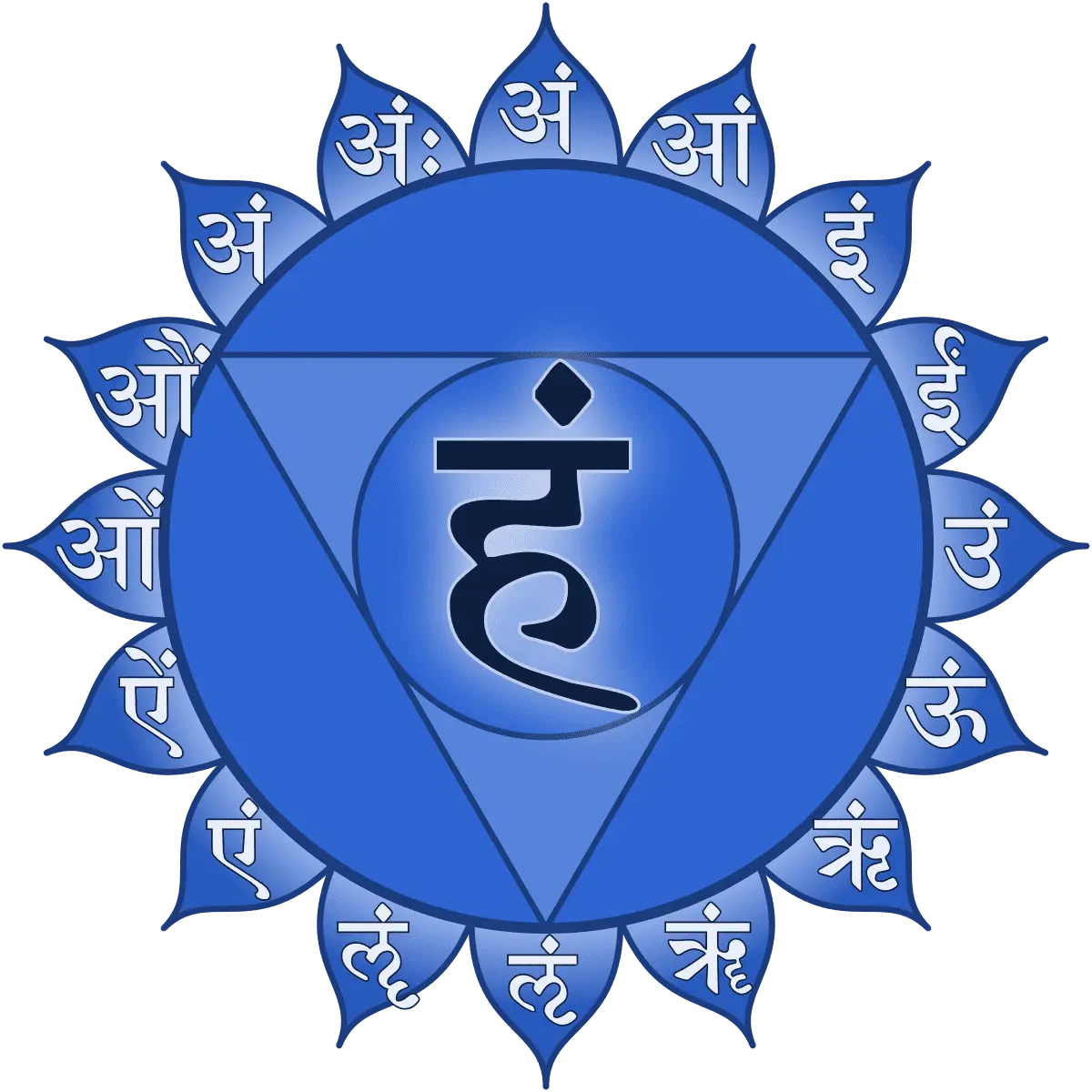
Throat chakra (Vishuddha): speaking your truth




 ·
4 min read
In yoga tradition, the body has seven main energy centers, called chakras, that run from the base of the spine to the top of the head. The throat chakra is the fifth, in the neck. Its Sanskrit name is Vishuddha, usually translated as “especially pure.” Its color is blue, and its element is ether, which the tradition ties to the sky.
What it’s about
Chakra teachers link the throat chakra to your sense of self and to how you communicate. The tradition says that when it’s balanced you express your full truth with no shame and feel calm, peaceful and confident. You’re decisive, patient and authentic, and you listen to the people around you with real care.
In everyday terms, this is your voice. Saying what you think and feel, asking for what you need, saying no when you mean no, and listening as well as you talk. In a sharing circle it’s the difference between saying the true thing and saying the safe thing.
When it feels out of balance
Chakra teachers link an unbalanced throat chakra with being very shy, withdrawn, indecisive, impatient or moody, being critical of yourself and others, and being dishonest. They also name mumbling, gossiping, interrupting others, a fear of speaking, and a hard time expressing yourself and your feelings. In chakra teaching the chakras work as one system, so a lower chakra out of balance can make the throat harder to balance.
None of that means you’ve neglected yourself or done anything wrong, and none of it should be shamed. A lot of it does come from something left unsaid, though. Ask yourself what you’re not saying, and to whom. What are you afraid will happen if you say it? Gossip and interrupting are worth a look too: sometimes they’re a way of being heard without saying the hard thing to the person it’s for.
If any of this is heavy or won’t lift, talk to a doctor or therapist. A chakra practice is a support, not a treatment.
Ways to work with it
Because the throat chakra’s element is the sky, the tradition suggests spending time with it. That can be as simple as going outside and listening to the birds.
The rest is practice. Say one true thing a day out loud, even a small one: “I’d rather not.” “That hurt.” “I love this.” Notice when you swallow words to keep the peace, and when you talk over someone instead of listening.
Yoga can feel intimidating at first if you’re not flexible or don’t know the poses, but you can start on your living room floor. Common throat chakra poses are fish pose, cobra, plow pose, child’s pose, camel pose and shoulder stand. A quick YouTube search for throat chakra yoga will turn up full routines.
For a short practice, sit with your shoulders and jaw relaxed and breathe slowly. On each out-breath, hum quietly and feel the sound in your throat.
Some people also use the tradition’s extras. They eat the foods it pairs with this chakra, like blueberries, blackberries, plums, dragon fruit, eggplant, purple cabbage, seaweed, cinnamon and coconut water, or wear blue. Some rub basil, bergamot, cedarwood, peppermint or sage oil on the neck while thinking about what they want it for, or diffuse it, and some carry or meditate with blue lace agate, lapis lazuli, sodalite or aquamarine.
Affirmations are short statements you repeat to yourself in the present tense. A few for the throat chakra:
- I speak my thoughts clearly, with integrity.
- I express who I truly am.
- I take up for myself.
- My voice is strong, and my voice matters.
If the first thing you try doesn’t help, try another, or mix a few into a routine of your own.
A question to sit with
- What have I been wanting to say, and to whom?
- When do I go quiet to keep the peace?
- How well do I listen when someone else is talking?
The seven chakras