
Chanting the sounds of the chakras




 ·
6 min read
·
6 min read
In the yogic tradition, the body has seven main energy centers, called chakras, and each one is given a sound. These one-syllable sounds are called bija, or seed, mantras. Chanting them is a simple practice for focus: the sound gives your mind something to rest on, and the tradition links each chakra to a part of life you can reflect on while you chant. Here are the seven, from the base of the spine to the top of the head, each with a short practice and a few questions to notice.
Lineages differ a little on the sounds, especially for the top two. This practice uses OM for the third eye and AH for the crown.
The root chakra: LAM (LUHM)
The root chakra, or Muladhara, is placed at the base of the spine. In yogic teaching it’s the foundation of the system and is linked to our sense of security and grounding. Its sound is “LAM,” pronounced LUHM.
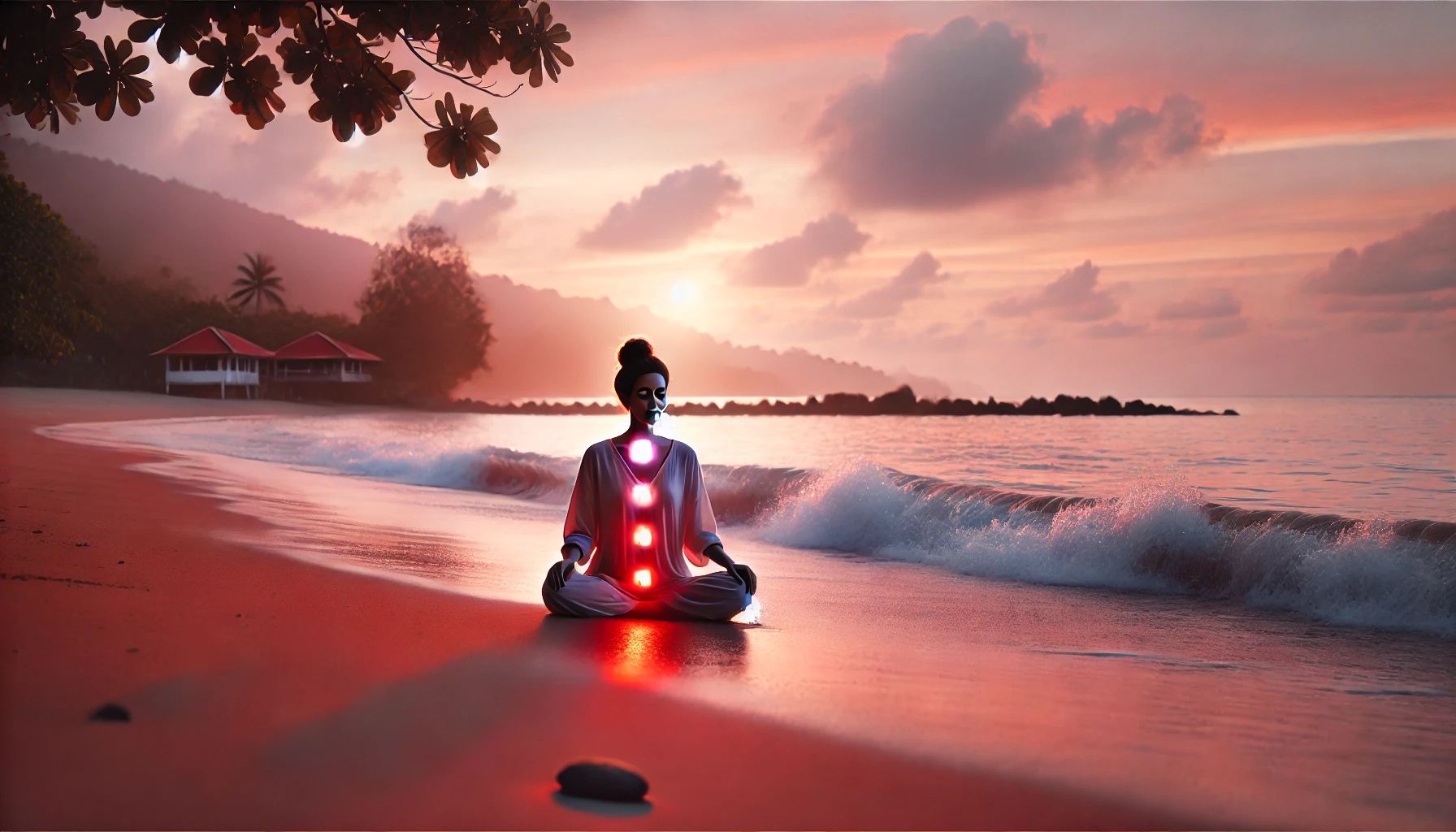
Find a quiet place where you can sit comfortably, on the ground if you can. Close your eyes and take a few deep breaths. Imagine roots growing from your body deep into the earth. Chant “LAM” slowly and deeply, and notice where you feel the sound in your body. With each chant, picture a red glow at the base of your spine.
As you chant, notice your thoughts and feelings about security. If fears or worries come up, name them to yourself without judging them. Afterward, think about what helps you feel safe and steady day to day: time in nature, a mindfulness practice, routines that give your life some structure.
The sacral chakra: VAM (VUHM)
The sacral chakra, or Svadhisthana, is placed just below the navel. The tradition links it to emotion, creativity and sensuality. Its sound is “VAM,” pronounced VUHM.
Sit comfortably, close your eyes, and breathe into the area just below your navel. Chant “VAM” in a steady rhythm and notice the hum in your lower belly. Picture an orange light there, getting brighter with each chant.
Pay attention to how you express yourself creatively and how you respond emotionally. Where do you hold yourself back? Notice it without forcing anything, then make time for whatever inspires you: painting, dancing, writing, any kind of art that feels like yours.
The solar plexus chakra: RAM (RUHM)
The solar plexus chakra, or Manipura, is placed above the navel. Yogic teaching links it to personal power, confidence and self-discipline. Its sound is “RAM,” pronounced RUHM.
Sit comfortably with your hands resting on your upper belly. Close your eyes and take deep, steady breaths. Chant “RAM” and notice the sound under your hands. Picture a yellow sun there, getting warmer with each chant.
Reflect on your sense of your own power and worth. Where in your life do you feel powerless or unsure of yourself? Alongside the chanting, set yourself small goals you can actually reach. Meeting them builds discipline and a sense of accomplishment.
The heart chakra: YAM (YUM)
The heart chakra, or Anahata, is placed at the center of the chest. The tradition describes it as the bridge between the physical and the spiritual, and links it to love and compassion. Its sound is “YAM,” pronounced YUM.
Sit comfortably and place your hands over your heart. Close your eyes and breathe deeply, focusing on the center of your chest. Chant “YAM” and feel the gentle hum there. Picture a green light at your heart, spreading a little further with each chant.
Think about your relationships and how much love and compassion you have room for. Are there resentments you’re still carrying? Look at your own part in them, and at what forgiving yourself or someone else would ask of you. Then do something kind for someone, and let yourself receive love from the people around you.
The throat chakra: HAM (HUM)
The throat chakra, or Vishuddha, is placed at the throat. The tradition links it to communication and speaking the truth. Its sound is “HAM,” pronounced HUM.
Sit comfortably and rest your hands gently on your throat. Close your eyes and breathe deeply. Chant “HAM” and feel the vibration in your throat. Picture a blue light there.
Reflect on how honestly you express yourself. Are there truths you’re holding back, or places where it’s hard to speak up? Practice saying what’s true in your conversations, and try other ways of expressing yourself, like writing or singing.
The third eye chakra: OM (OHM)
The third eye chakra, or Ajna, is placed between the eyebrows. Yogic teaching links it to intuition and insight. Its sound is “OM,” pronounced OHM.
Sit comfortably, close your eyes, and bring your attention to the space between your eyebrows. Take deep, steady breaths. Chant “OM” and notice the hum through your head. Picture a deep indigo light there.
Consider how well you listen to your own inner knowing. When do you override it, or feel unsure of it? Spend time in meditation, journaling, or anything else that helps you listen inward.
The crown chakra: AH (AAH)
The crown chakra, or Sahasrara, is placed at the top of the head. The tradition calls it the gateway to our connection with the divine and with our higher self. Its sound is “AH,” pronounced AAH.
Sit comfortably, close your eyes, and bring your attention to the top of your head. Take slow breaths. Chant “AH” and let the sound open out. Picture a violet or white light there, and notice any sense of being part of something larger.
Reflect on what you believe and how connected you feel to it. Is there part of your spiritual life that needs more attention? Spend time on the practices that feel right to you, like prayer, meditation or being out in nature.
Making it part of your day
- In the morning, start with a short chanting session. Pick one chakra a day, so you spend time with each of them over the week.
- During the day, when you feel scattered or stressed, take a few minutes to chant one sound and notice what you’re feeling.
- In the evening, chant for a few minutes to wind down, then think back over what you noticed.
- With other people. Join a meditation group or invite a few friends to chant with you.
What you get from this comes from the attention you bring to it. Chanting is a practice for focus and reflection, and it isn’t a treatment for anything. If the fears or old hurts that come up feel like too much to handle, talk to a doctor or a therapist.