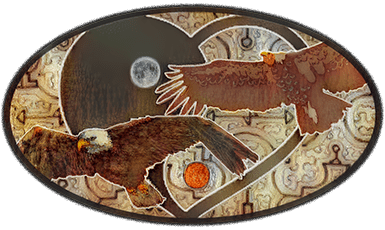

✨ This weekend, we open our circle once again for Ceremony — a sacred space of deep listening, heartfelt connection, and personal truth.
We’re honored to welcome new members into this shared path, we come together not to be fixed or guided, but to remember — through the wisdom of Ayahuasca, and through the mirror of each other.
To our community: thank you for showing up — for yourselves, for each other, and for the love that continues to ripple out from every ceremony. Your presence is the prayer. 🌿
This is the work. Feeling is healing.
Let’s walk together.
A’ho 💛 Two Birds Church 🕊️🦅

Yes! This idea of "Remembering" has been sitting with me lately after some deep medicine experiences. Have you ever felt something so familiar about your medicine experience? Not the remembrance of a previous trip but a feeling, a sense that you've been here before but know you haven't. Maybe its simply remembering and recognizing your higher self. Remembering who you truly are. That long forgotten version of ourselves that is beyond objective viewpoint. The version of ourselves that is a pure and present observer. I have found great solace lately in the realization that so much of how I/we experience life is through story, projection, and narrative. Understanding this on a deeper level seems to allow more room or separation for the idea that we are and life simply IS. Regardless of how we try to control it. "Remember" who you are and "Let Go" of the stories. Just my two cents


@Bud To perceive always means to perceive something. We believe that the object of our perception is outside of the subject, but that is not correct. When we perceive the moon, the moon is us. When we smile to our friend, our friend is also us, because she is the object of our perception. When we perceive a mountain, the mountain is the object of our perception. When we perceive the moon, the moon is the object of our perception. When we say, “I can see my consciousness in the flower,” it means we can see the cloud, the sunshine, the earth, and the minerals in it. But how can we see our consciousness in a flower? The flower is our consciousness. It is the object of our perception. It is our perception. To perceive means to perceive something. Perception means the coming into existence of the perceiver and the perceived. The flower that we are looking at is part of our consciousness. The idea that our consciousness is outside of the flower has to be removed. It is impossible to have a subject without an object. It is impossible to remove one and retain the other. The source of our perception, our way of seeing, lies in our store consciousness. If ten people look at a cloud, there will be ten different perceptions of it. Whether it is perceived as a dog, a hammer, or a coat depends on our mind — our sadness, our memories, our anger. Our perceptions carry with them all the errors of subjectivity. Then we praise, blame, condemn, or complain depending on our perceptions. But our perceptions are made of our afflictions — craving, anger, ignorance, wrong views, and prejudice. Whether we are happy or we suffer depends largely on our perceptions. It is important to look deeply at our perceptions and know their source.
Hanh, Thich Nhat. The Heart of the Buddha's Teaching: Transforming Suffering into Peace, Joy, and Liberation (pp. 53-54). Harmony/Rodale/Convergent. Kindle Edition.