
Toxic positivity: why good vibes only doesn’t work




 ·
6 min read
·
6 min read
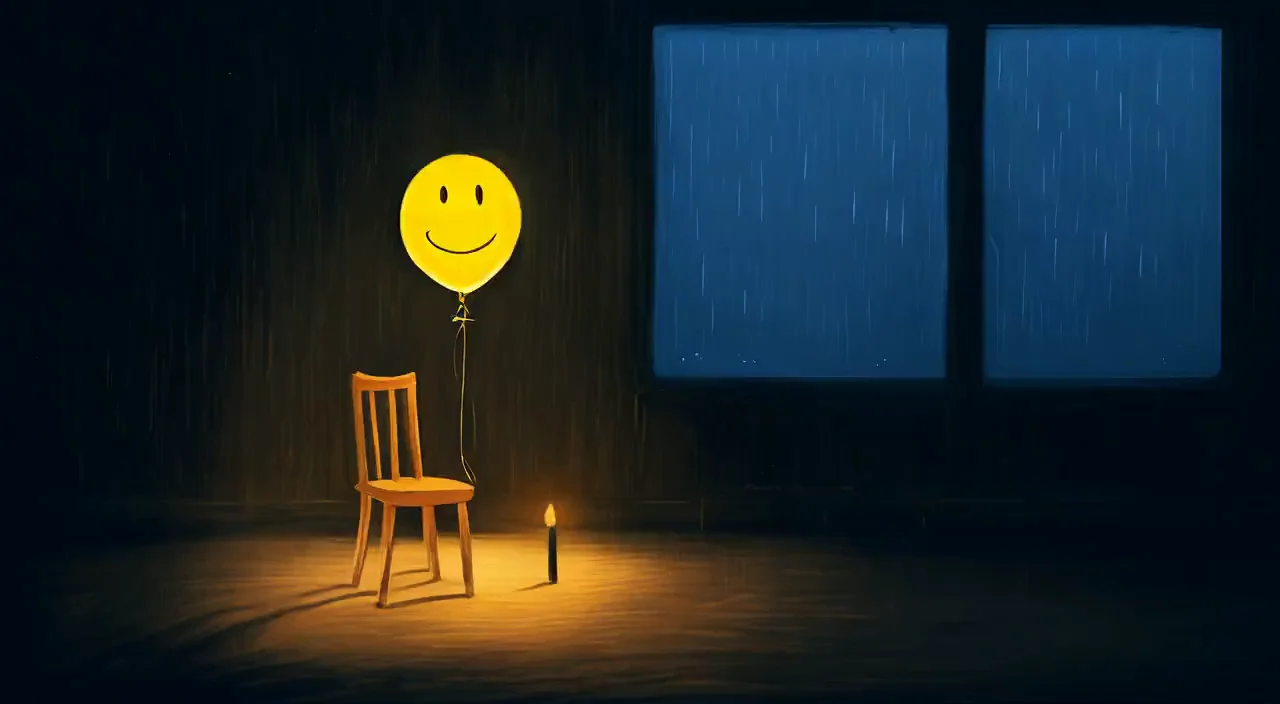
Toxic positivity is the pressure to stay upbeat no matter what is happening, so that sadness, fear, anger and grief get treated as problems to get rid of. “Good vibes only” doesn’t work because hard feelings don’t leave when you’re told to drop them; they go underground, and the person who was told to cheer up learns to stop telling you how they really are.
We’re a small church in Anna, Texas, and our Sunday circle is a place for honest sharing, hard feelings included. So we have opinions about this one. Here’s what toxic positivity looks like, why it backfires, and what to say instead, to other people and to yourself.
What toxic positivity looks like
The psychotherapist Whitney Goodman, who wrote the 2022 book Toxic Positivity: Keeping It Real in a World Obsessed with Being Happy, describes it as the pressure to be happy, or to be working on being happy, whatever the situation. She says she started noticing it around 2019, on social media and then in her own clients (WebMD interview).
It usually sounds kind. Someone shares that they lost a job, or that their marriage is in trouble, and the answer comes back fast: “Everything happens for a reason.” “At least you have your health.” “Just stay positive.” The speaker means well. What the listener hears is that their feeling is a problem, and the conversation is over.
Optimism and hope are fine. The difference is timing and permission. Hope leaves room for the hard feeling first. Toxic positivity skips it, because the hard feeling makes somebody uncomfortable. Very often that somebody is the person doing the cheering up.
Why “good vibes only” backfires
A feeling you push down is still there. It shows up later as irritability, a short temper with someone who had nothing to do with it, a night of scrolling, a drink you didn’t plan on. Goodman makes the same point: pushed-down feelings tend to come back in your sleep, your mood or your eating.
It also costs you closeness. If the people around you learn that only the cheerful version of them is welcome, they bring you that version and keep the rest to themselves. You end up with relationships where nobody quite tells the truth.
And it gets in the way of change. Anger often points at a line someone crossed. Grief tells you what mattered. Fear can be a warning worth hearing. If every hard feeling gets painted over, you lose the information it was carrying.
The spiritual version: love and light
Spiritual communities have their own brand of this. “Raise your vibration.” “Negativity isn’t welcome here.” “Just send it love and light.” “You attracted this.” The psychologist John Welwood called the bigger pattern spiritual bypassing: using spiritual ideas and practices to sidestep feelings and wounds you’d rather not deal with.
We’ll be honest about our own corner. Plenty of people come to a church like ours hoping to feel lighter without looking at what’s heavy. It doesn’t work that way here either. One of our principles is what we call Inner Responsibility: owning your emotions instead of blaming outside forces, or “energies”, for them. A bad mood is something to look at, and it usually has more to do with you than with the room.
What to say instead
Most of the fix is slowing down and letting the other person have the feeling they have. A few swaps:
- Instead of “Everything happens for a reason,” try “I’m sorry. That’s a lot.”
- Instead of “Look on the bright side,” try “What’s the hardest part right now?”
- Instead of “At least it’s not worse,” try “That sounds really hard.”
- Instead of “Don’t be sad,” try “It makes sense you’re sad.”
- Instead of “Just stay positive,” try “Do you want help, or do you want me to listen?”
- Instead of “Other people have it worse,” try “This matters, even if someone else has it worse too.”
- Instead of “Good vibes only,” try “All of it is welcome here, the good days and the bad ones.”
You don’t have to fix anything. At our Sunday circle the rule is no advice-giving and no fixing, and people are often surprised how much better it feels to be heard without being handed a solution.
Notice why you want to cheer them up
Here’s the uncomfortable part. When we rush to make someone feel better, it’s often our own discomfort we’re trying to settle. Their sadness stirs up something in us, maybe helplessness, maybe an old grief of our own, and “look on the bright side” makes it go away for both of us.
So the next time you feel the urge to reach for a silver lining, pause and ask what you’re feeling. If it’s “I can’t stand watching this,” that’s yours to sit with. You can stay in the conversation and feel it at the same time.
Toxic positivity toward yourself
The harshest version is the one we use on ourselves. “I shouldn’t feel this way.” “Other people have real problems.” “I’m just going to focus on gratitude.” Gratitude is a good practice, and so is choosing where to put your attention. Neither works as a lid.
Owning a hard feeling looks something like this:
- Name it plainly. “I’m angry.” “I’m jealous.” “I’m scared about money.” Skip the softening.
- Notice where you feel it in your body, and let it be there for a minute without arguing with it.
- Ask what it’s about. Is this reaction about what’s happening now, or does it feel older than that?
- Ask what part is yours. Even when someone else did something wrong, your reaction is still yours to understand.
- Then decide what to do, if anything. Sometimes it’s a conversation, sometimes a boundary, sometimes nothing but letting the feeling run its course.
This is the same ground as shadow work: the feelings you were taught to hide don’t disappear, and getting to know them is how you stop being run by them. It also takes some honesty with the people around you, since “I’m fine” is the most common piece of toxic positivity there is.
When it’s more than a bad week
Feeling your feelings is not the same as being stuck in them. If sadness or anxiety won’t lift, if you’re not sleeping or eating, or if you’re having thoughts of hurting yourself, talk to a doctor or a therapist. In the US you can call or text 988 at any hour to reach the Suicide and Crisis Lifeline.
If you want a place where the hard days are as welcome as the good ones, come to Sunday Service, 3 to 6pm in Anna.